Pacific Northwest Salmon Fishing: Chinook, Coho & Pink Salmon Seasons Explained
It's 5:30 a.m. on the Strait of Juan de Fuca. The water is flat gray, the mountains are hiding behind low clouds, and the angler in the boat next to mine is already into his second Chinook of the morning. Meanwhile, the group on the charter boat one cove over hasn't had a bite since they launched.
Same water. Same morning. Completely different results.
The difference wasn't luck — it was timing. Specifically, knowing which run was moving, where those fish were holding, and what conditions were pushing them into feeding mode. Pacific Northwest salmon fishing is one of the most rewarding fisheries in North America, but it rewards anglers who understand the system, not just the spots.
Whether you're planning your first trip to Puget Sound, targeting Chinook off the Oregon coast, or trying to intercept a Pink salmon run in a Washington river, this guide breaks down the three major salmon species you'll encounter — what drives their seasonal timing, where to find them, and how to put more fish in the boat.
Understanding Pacific Northwest Salmon: Why Timing Is Everything
Pacific Northwest salmon are anadromous — born in freshwater, they migrate to the ocean and return to their home rivers to spawn. That lifecycle creates incredibly predictable seasonal windows, which is both the beauty and the challenge of chasing them.
NOAA Fisheries tracks salmon returns throughout the Pacific Northwest, and the data reflects something every experienced PNW angler already knows: fish move on a schedule shaped by river temperature, ocean conditions, and genetics. Miss the window and you're throwing gear into empty water.
The three species most recreational anglers target are:
- Chinook salmon (King salmon) — the largest and most prized
- Coho salmon (Silver salmon) — aggressive fighters that run close to shore
- Pink salmon (Humpy salmon) — the most abundant, running on a strict odd-year cycle in most of Washington
Each species follows a different calendar, targets different habitat, and responds to different presentations. Understanding those differences is the foundation of fishing this region effectively.
How Ocean Conditions Shape the Runs
Before a single salmon enters a river, it has spent one to four years feeding in the Pacific. Ocean temperature, upwelling patterns, and forage availability during those ocean years directly affect how fat — and how numerous — returning adults will be.
La Niña years tend to drive colder, more productive nearshore waters and often produce stronger returns. El Niño years can push salmon offshore or delay returns. Checking NOAA's seasonal outlooks before planning a multi-day trip gives you useful context on what the ocean is doing and whether conditions favor early or late returns that season.
Tides Still Matter — Even on the Pacific
Moving water concentrates bait, and bait concentrates predators. The Pacific coast operates with bigger tidal swings and different current dynamics than Atlantic fisheries, but the core principle is the same.
In Puget Sound and on coastal rivers, incoming tides push baitfish into creek mouths, eddies, and shallow flats. Salmon stage in those same areas waiting to move upstream. Check the tide charts for your area before you commit to a spot — especially if you're fishing tidal river sections or near estuary mouths.
Chinook Salmon: The King Season You Can't Afford to Miss
There's a reason they call Chinook "Kings." These fish can run 30, 40, even 50-plus pounds, and when one turns and runs on your line in fast current, you feel it in your knees. Chinook are the marquee species of Pacific Northwest salmon fishing, and planning around their season is the single most important thing you can do before booking a trip.
When and Where Chinook Run
Chinook have the longest and most complex seasonal pattern of the three species. There are both spring Chinook (also called springers) and fall Chinook, and they behave quite differently.
Spring Chinook begin entering coastal rivers as early as March in Oregon and southern Washington. The Columbia River springer run is legendary — anglers target these fish from March through June as they stage in the lower river and push upstream. Springers are typically leaner than fall fish, but they're highly prized for their early-season flavor.
Fall Chinook are the primary target for most recreational anglers. Returns build through July and peak roughly between August and October, depending on the specific river system. In Puget Sound, Chinook are present in marine waters throughout summer, with August being particularly productive around major feeding areas like the San Juan Islands and the Strait of Juan de Fuca.
| Season | Location | Peak Timing |
|---|---|---|
| Spring Chinook | Columbia River (OR/WA) | March–June |
| Summer Chinook | Puget Sound marine waters | July–August |
| Fall Chinook | Washington coastal rivers | September–October |
| Fall Chinook | Oregon coastal rivers | August–October |
Targeting Chinook: Depths, Structure, and Presentations
Chinook are deepwater fish by instinct. In Puget Sound, it's common to find them holding 80 to 150 feet down, often near underwater structure like drop-offs, ledges, and current seams.
For boat fishing in marine waters:
- Downriggers are the standard tool — set your gear at confirmed depth marks from your sonar
- Hoochies (squid-style lures) and spoons trolled at 2.0–2.5 mph are consistent producers
- Plug-cut herring in a slow troll is a classic presentation that still outfishes everything on some days
For river fishing:
- Back-trolling plugs like Kwikfish or Flatfish is effective for lower river sections
- Drift fishing with cured roe under a float is the go-to for wade anglers
- Side-drifting from a drift boat covers water efficiently on bigger rivers
Field note: Fish suspended in a temperature break are almost always feeders. When you mark fish stacked at a specific depth, don't just troll through — circle back and work that zone deliberately before moving on.
Chinook Regulations: Know Before You Go
Chinook regulations in the Pacific Northwest are among the most complex in American fishing. Seasons, bag limits, and river-specific rules change annually based on stock assessments. Always verify current seasons with the Washington Department of Fish & Wildlife or the Oregon Department of Fish & Wildlife before your trip — what applied last year may not apply this season.
Coho Salmon: Aggressive Fighters That Love the Shallows
If Chinook are the heavyweights, Coho are the athletes. Averaging 8 to 12 pounds with big fish pushing 20, Coho are known for their aggression, their willingness to chase a fast-moving lure, and the aerial acrobatics they pull once hooked. For many anglers, Coho are simply the most fun salmon to catch.
The Coho Season Window
Coho show up in Pacific Northwest waters later than Chinook, generally picking up steam in August and running through November. Marine fishing for Coho off the Washington coast and in Puget Sound can be exceptional from late August through September. River fishing typically peaks October through early November, though timing varies significantly by system.
Oregon coastal rivers — the Rogue, Chetco, Coos, and others — see strong Coho returns from October into December. These fish often enter rivers during or right after the first significant fall rains, which cool water temperatures and trigger upstream movement.
Where to Find Coho
Unlike Chinook, Coho feed actively near the surface and in shallower water. In marine environments, they're frequently found in the upper 40 feet of the water column, which makes them accessible to anglers without downrigger setups.
Key areas include:
- Kelp lines and rocky points — Coho patrol these edges hunting baitfish
- Estuary mouths — staging fish waiting for river conditions to come up
- Rip lines and current edges — especially during strong tidal movement
- Creek mouths after rain events — fresh water pulls fish toward their home systems
Presentations That Work for Coho
Coho's aggression is your advantage. They'll smash a fast-moving lure that Chinook would completely ignore.
Top Coho techniques:
- Casting spinners and spoons from shore or a small boat is highly effective, especially near river mouths
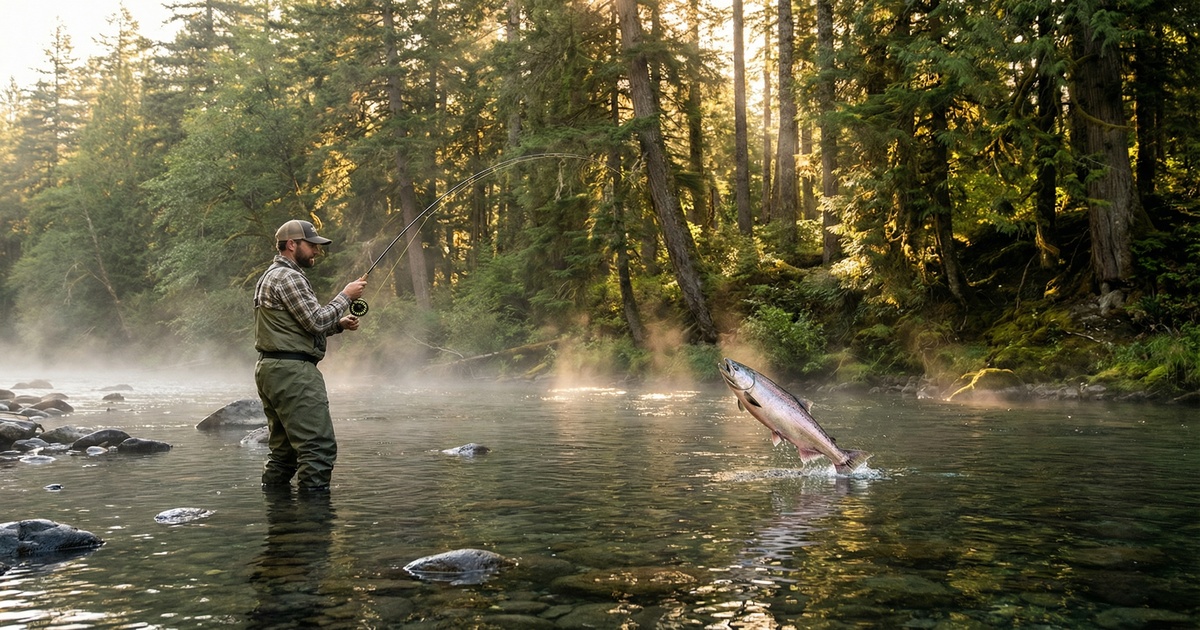
- Fly fishing — Coho are one of the most exciting Pacific salmon to target on a fly rod; pink or chartreuse Clouser Minnows are proven producers
- Trolling small spoons at faster speeds (2.5–3.0 mph) covers water efficiently
- Mooching with live or cut herring consistently produces big Coho in Puget Sound
Pro tip: When Coho are in a river but not responding to standard presentations, downsize dramatically. A small, lightly weighted jig under a float will often trigger fish that won't touch anything else.
Pink Salmon: The Odd-Year Phenomenon You Shouldn't Overlook
Here's something that trips up a lot of anglers new to the Pacific Northwest: in most of Washington, Pink salmon only run in odd-numbered years. 2023, 2025, 2027. Show up in an even year expecting a Pink run and you'll be wondering where everybody went.
The explanation is biological. NOAA Fisheries notes that Pink salmon have the shortest ocean lifespan of any Pacific salmon species — typically just two years — which locks populations into strict two-year return cycles. In most of Puget Sound and northern Washington river systems, that cycle aligns with odd years. Even-year Pink runs do occur on parts of the outer Washington coast, but they're significantly smaller than the odd-year runs.
When Pinks Are Running, They Run Hard
In strong odd years, Pink salmon returns to Puget Sound are staggering. Fish typically arrive in late July and build through August, with the run often peaking in mid-August before tapering through September.
These aren't the biggest fish — Pinks average 3 to 6 pounds — but the sheer volume makes for extraordinary action. When a major Pink run is in the Sound, you'll see them rolling on the surface by the thousands. It's one of those PNW fishing experiences that stays with you.
Fishing Pinks: Simplicity Wins
Pinks are the most approachable salmon for newer anglers. They're aggressive, they feed actively right up until they enter rivers, and they'll chase a wide variety of lures presented at most skill levels.
Best setups for Pink salmon:
- Small pink or chartreuse hoochies — the color pink is almost mandatory; the "pink and pink" rule is half-joking but half-serious
- Small spinners and spoons cast from shore near river mouths and beaches
- Buzz bombs and jigging spoons for pier and jetty fishing
- Light to medium spinning gear in the 8–12 lb range is ideal — these fish are exceptional sport on light tackle
Top locations during odd-year runs:
- Puget Sound beaches near the mouths of the Snohomish, Skagit, and Puyallup rivers
- Nearshore waters throughout the Strait of Juan de Fuca
- Small coastal creeks and rivers up and down the Washington coast
Check the fishing forecast for Seattle when timing a late summer Pink run in the Sound — barometric pressure and incoming weather systems influence how actively these fish feed, even in saltwater.
Reading Conditions: What Actually Triggers the Bite
Species knowledge gets you in the right place at the right time. Conditions knowledge is what separates consistently productive anglers from occasional ones.
Water Temperature and Salmon Behavior
Salmon are cold-water fish with a narrow optimal temperature band. In saltwater, Chinook and Coho feed most actively when surface temperatures sit between approximately 52°F and 58°F. When summer heats the surface above 60°F, fish go deep to find their comfort zone — which is exactly why your downrigger depth matters so much during August.
In rivers, water temperature is the primary trigger for upstream migration. Most salmon runs accelerate when river temps cool into the 50–55°F range. The first significant cold rains of fall are often the best thing that can happen for river fishing across the entire PNW.
Barometric Pressure and Feeding Activity
Salmon migration is driven by hormonal and environmental cues larger than any single weather system, but feeding behavior in pre-spawn fish does respond to pressure changes. A rising pressure pattern after a front has pushed through typically switches fish on. Stable high pressure maintains decent bite windows. A rapidly falling barometer often shuts feeding down.
Use HookCast's weather tools to track pressure trends in the 24–48 hours before your trip, particularly if you're making a long drive to the coast.
Baitfish Presence and Bird Activity
On the water, nothing tells you more than the birds. Diving gulls, murres, and terns working a section of water means baitfish — and salmon won't be far behind. Watch the surface for bait boils and rolling fish. In Puget Sound, birds working in tight, frantic circles over a flat calm surface are often the most reliable strike indicator you'll encounter all morning.
Quick-Reference: Pacific Northwest Salmon Season Planner
| Species | Best Saltwater Timing | Best River Timing | Primary Locations |
|---|---|---|---|
| Chinook | July–August | March–June (spring), Sept–Oct (fall) | Puget Sound, Columbia River, Oregon coast |
| Coho | August–September | October–November | Washington coast, Puget Sound, OR coastal rivers |
| Pink | Late July–August (odd years only) | August–September (odd years) | Puget Sound, northern WA rivers |
Key checklist before you go:
- [ ] Confirm which run is currently active for your target species and region
- [ ] Verify current regulations — salmon rules change annually and vary by river system
- [ ] Check water temperature forecasts — surface temps above 60°F push Chinook deep
- [ ] Pull tide charts for your launch window, especially on tidal river sections
- [ ] Watch barometric pressure trends in the 24–48 hours before departure
- [ ] Match gear depth and speed to the species — Chinook deep and slow, Coho shallower and faster
- [ ] In Pink years, hit Puget Sound beaches in mid-August for peak action
- [ ] Always have a backup location — Pacific salmon runs can shift by miles within 24 hours
FAQ
When is the best time to fish for Chinook salmon in Puget Sound?
The peak window for Chinook in Puget Sound marine waters is generally July through August, when mature fish stage before beginning their river returns. Anglers fishing the San Juan Islands, Strait of Juan de Fuca, and Hood Canal often see the strongest action during this period. Deeper trolling with downriggers is the most consistent approach, as fish hold well below the warm summer surface water.
Do Pink salmon really only run in odd years in Washington?
Yes — in most of Puget Sound and northern Washington river systems, Pink salmon follow a strict odd-year return cycle, meaning strong runs occur in 2025, 2027, and so on. This pattern exists because most Puget Sound Pinks complete their ocean life in exactly two years, locking the population into alternating-year returns. Even-year Pink runs do occur on parts of the outer Washington coast, but they're significantly smaller than the odd-year fishery.
What is the difference between fishing for Coho vs. Chinook salmon?
The most important practical differences are depth and speed. Chinook hold deep — often 80 to 150 feet in marine water — and respond best to slower trolling presentations around 2.0–2.5 mph. Coho feed aggressively near the surface and will chase faster presentations, making them far more accessible from shore and on lighter tackle. Coho also run later in the season, with peak saltwater action in August–September compared to Chinook peaking in July–August.
Where is the best Oregon salmon fishing in the fall?
Oregon's coastal rivers — including the Rogue, Chetco, Coos, and Umpqua — offer outstanding fall Chinook and Coho fishing from roughly August through November. The Rogue River in particular holds a strong reputation for both species. Fall runs accelerate markedly after the first major rain events of autumn, which cool river temperatures and trigger upstream migration. Always check current Oregon Department of Fish & Wildlife regulations before fishing, as seasons and retention rules vary by river.
How do tides affect Pacific Northwest salmon fishing?
Tidal movement concentrates baitfish at predictable locations — estuary mouths, current seams, and shallow flats — and salmon feed actively in these areas during moving water. In Puget Sound, incoming tides that push bait toward creek mouths and points are often the most productive feeding windows. For tidal river sections, the period around low slack water can cause fish to stack in deeper pools where they become more visible and catchable. Planning your fishing around the hour or two before and after major tide changes gives you the best odds of finding active fish.