Largemouth Bass Spawning Guide: Bed Fishing Tactics by Water Temperature
There's one week every spring I circle on my calendar in red. Not a holiday, not a tournament date — it's the week the water thermometer on my kayak reads somewhere between 58 and 65 degrees for three days running. That's when the biggest largemouth bass of the year slide up shallow, and if you know what you're doing, you can have the best fishing of your life.
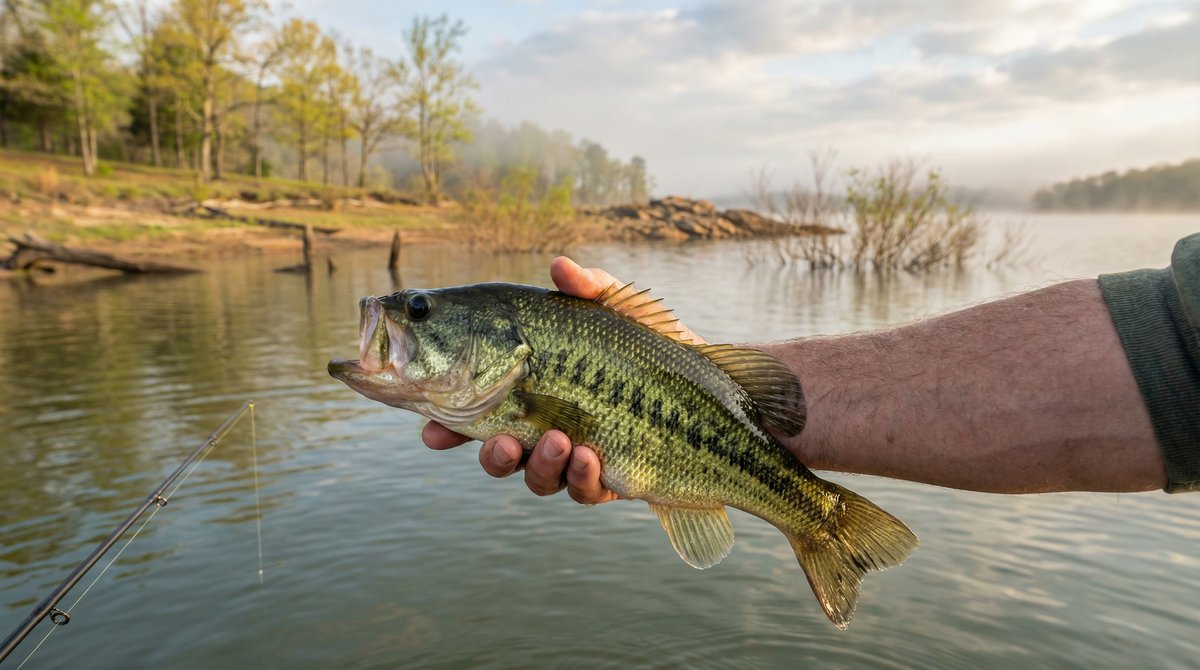
Last April, I paddled into a shallow cove on a central Missouri reservoir just as the sun cleared the tree line. The water was 63°F. I could see beds — light-colored, fanned-out circles on the gravel bottom — before I even made a cast. Three fish over four pounds in the next two hours, all released carefully before I headed home. No tournament entry fee. No $50,000 bass boat. Just a kayak, a spinning rod, and a working understanding of what bass are doing and why.
That's what this guide is about. Not "throw a Senko and hope" — but the actual biology, the temperature windows, and the specific tactics that change as the spawn progresses.
Why Water Temperature Is the Real Trigger for Bass Spawning
Most anglers know spring means spawn. Fewer understand that water temperature — not calendar date, not moon phase alone — is the primary driver of largemouth bass spawning behavior. That distinction matters because spring weather is wildly inconsistent. A warm February can push fish shallow in Missouri while a cold snap in April resets everything. Fish by the calendar and you'll miss it.
According to NOAA Fisheries, largemouth bass (Micropterus salmoides) are temperature-sensitive spawners. Consistent water temperatures in the 55–75°F range drive the spawn cycle through three distinct phases: pre-spawn, spawn, and post-spawn. Each phase calls for different tactics, different locations, and different expectations.
The Three Spawning Temperature Windows
| Phase | Water Temp | What Bass Are Doing |
|---|---|---|
| Pre-Spawn | 50–62°F | Staging in transition zones, feeding aggressively |
| Spawn | 62–75°F | On beds, guarding eggs and fry |
| Post-Spawn | 65–80°F | Recovering, transitioning toward summer patterns |
These ranges shift by region. Southern reservoirs — Georgia, Texas, Florida — may see spawn activity as early as February. Up in the upper Midwest where I fish most, we're typically looking at late April through June.
The other variable that matters: consistency. Bass don't commit to beds during a single warm afternoon. It takes several consecutive days at spawning temperature before the bulk of the population moves up. A cold front that drops water temperature even 5–6 degrees can push fish off beds and delay the whole cycle by a week or more.
Pre-Spawn: The Feeding Window You Don't Want to Miss
Honestly, pre-spawn might be my favorite phase. The fish are aggressive, they're transitioning out of their winter depth ranges, and they're putting on weight before the spawn. They haven't locked onto beds yet, which means they're actively hunting.
Water temp range: 50–62°F
Where to Find Pre-Spawn Bass
Bass don't move directly from deep winter haunts to the shallows. They stage — holding in transition zones and feeding before committing to the flats. Look for:
- Secondary points leading into spawning coves
- Channel edges at 8–15 feet where the bottom breaks toward shallow flats
- Submerged timber in the 6–12 foot range
- Rock piles and chunk rock banks that absorb and hold warmth
North-facing banks warm more slowly in spring. South and southwest banks that catch afternoon sun can run 3–5 degrees warmer than the main lake — and they'll hold the first pre-spawn fish of the year.
Pre-Spawn Tactics and Baits
This is the time for reaction baits and larger profile lures. Bass are in a feeding mode. Match that energy.
Best pre-spawn setups:
- Lipless crankbaits (½ to ¾ oz) worked over submerged vegetation and along channel edges
- Jerkbaits on 10–15 lb fluorocarbon — pause 3–5 seconds in cold water
- Swim jigs with a paddle tail trailer
- Carolina rigs dragged slowly through transition zones
Field note: When water is 55°F or below, I slow everything down significantly. A jerkbait with a 5-second pause will out-fish one with a 1-second pause almost every time. Cold fish don't chase — they ambush.
Before heading out, I'll pull up HookCast to check the barometric pressure trend. A rising or stable pressure following a low-pressure system is your green light. Pre-spawn bass feed hard in those windows.
Spawn Phase: Bed Fishing Tactics for Largemouth Bass
This is what everyone wants to know about, and the part that requires the most deliberate thought — tactically and ethically. Let's cover both.
Water temp range: 62–75°F
Finding the Beds
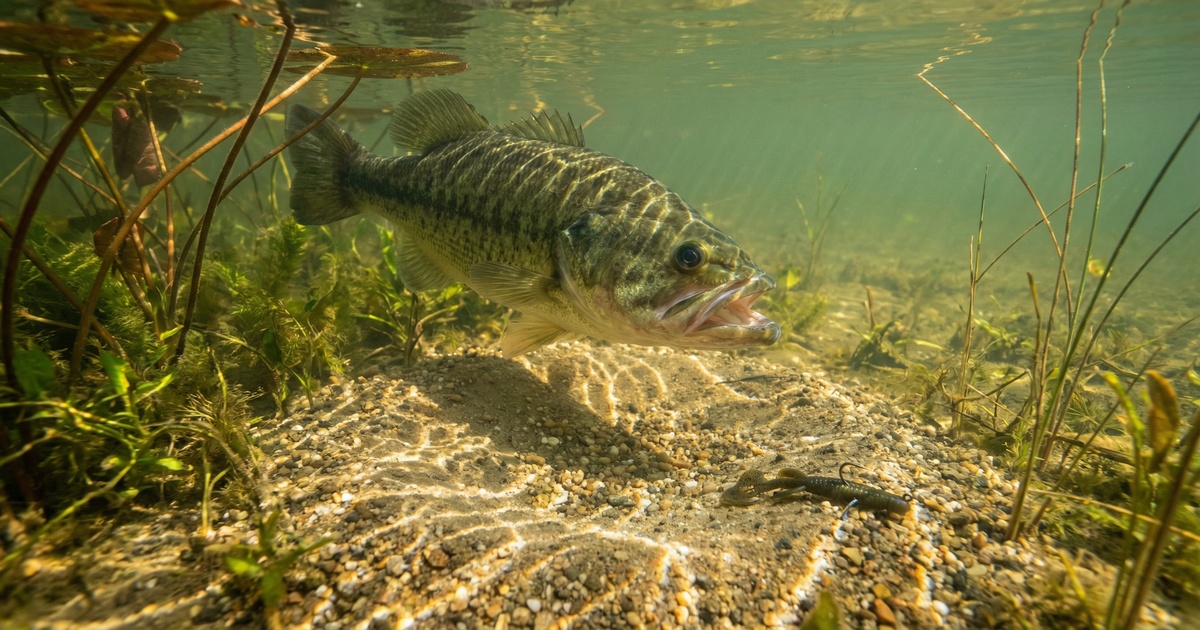
Largemouth bass build beds in shallow, firm-bottomed areas protected from heavy wind and wave action. Males fan out nests with their tails, creating light-colored, circular depressions — usually 1–3 feet across. Once you know what you're looking for, they're not hard to spot.
Prime spawning habitat:
- Protected coves and backwater areas
- Gravel, sand, or clay bottom — hard substrate is essential for holding eggs
- Depth of 1–8 feet, most commonly 2–4 feet
- Near some form of cover — a dock piling, laydown log, or weed edge
- Calm water away from boat wakes and main lake chop
Polarized sunglasses are non-negotiable for bed fishing. The difference between spotting a bed at 15 feet versus 40 feet often determines whether you spook the fish before your first cast. From a kayak, the low profile and quiet approach give a real advantage here.
Bed Fishing Tactics
Bed fishing is a patience game. You're not triggering a feeding strike — you're provoking a territorial or protective response. The bass on the bed is guarding eggs or fry, and your goal is to present something irritating enough that it picks the bait up to remove it.
Top bed fishing presentations:
- Soft plastic creature baits — beaver-style, fluke, or craw — fished weightless or with a light nail weight on a wacky rig
- Ned rig — the subtle, nose-down presentation drives bedding bass crazy without looking threatening
- Drop shot — keeps the bait in the strike zone without requiring repeated retrieves across the nest
- Tube baits — old school but effective; the subtle quiver of a tube on a shaky head mimics something alive on the bed
The approach: Cast beyond the bed and work the bait into position slowly. Let it sit. Then let it sit some more. A bedding bass will often pick up a bait and move it off the nest — that's your strike. Fast or erratic retrieves tend to push fish out of their territory rather than trigger them.
Color: In clear water, natural colors — green pumpkin, watermelon seed, june bug — are reliable. In stained or muddy water, brighter options like chartreuse or white help the fish locate the bait.
Pro tip: If you spot a bed but the fish won't commit, back off and rest the area for 10–15 minutes before returning. Repeated casts can make bedding bass increasingly wary. Patience consistently outperforms persistence here.
Bed Fishing Ethics: Handle Spawning Bass with Care
I'll be direct about this. Bed fishing is legal in most states — always check your local regulations, since some jurisdictions have seasonal closures or special rules during spawn — but how you handle spawning fish carries real consequences.
Removing a bass from the bed, even briefly, exposes eggs to predation from bluegill and other nest raiders. Research from NOAA Fisheries on black bass biology supports what experienced anglers already know from observation: prolonged removal from the nest during spawn puts measurable pressure on local bass populations over time.
Best practices for spawning bass:
- Use barbless hooks or crimp your barbs — reduces handling time significantly
- Keep the fish in the water during unhooking whenever possible
- Skip extended photos of bedding bass — if you want a shot, make it fast
- Release the fish on or near the bed so it can return to guarding immediately
- Don't target the same bed repeatedly — once you've caught the fish, let it recover
Kayak fishing has a natural advantage here. Without a livewell, quick release is the only option. That constraint has made me a more deliberate catch-and-release angler overall.
Post-Spawn: Locating Bass After They Leave the Beds
The post-spawn is the most misunderstood phase of the spring season. Anglers who were putting up big numbers during the spawn suddenly find the bite dead and blame the fish. The fish didn't disappear — their priorities shifted.
Water temp range: 65–80°F
What Bass Do After Spawning
After a female releases eggs, she vacates the nest immediately. The male stays behind to guard fry for a week or two. Females go through a genuine recovery period — lethargic, sulky, and genuinely difficult to catch. That's just the reality of the post-spawn window.
Then things shift again. As water temps push into the upper 70s, bass begin transitioning toward early summer patterns: suspending over deeper structure, relating to emerging vegetation, and targeting bluegill and shad that are now spawning themselves.
Post-Spawn Tactics
Target recovering females first — and consider going topwater.
Post-spawn females are often found just outside spawning flats, suspended at mid-depth, or tucked under dock edges. Topwater presentations can be surprisingly effective on larger females in this window, particularly during low-light periods.
Post-spawn setup recommendations:
- Hollow-body frogs and poppers over shallow grass mats and pad fields
- Buzzbait worked fast along weed edges at dawn and dusk
- Finesse football jig on rock points at 8–15 feet for larger, recovered females
- Shaky head or drop shot for suspended fish over main lake structure
One pattern I've keyed in on over the years: panfish spawning activity in late May and early June reliably concentrates bass. When you spot bluegill beds along the bank in the shallows — usually identifiable in clear water by the same circular, fanned-out look as bass beds — position nearby. Bass absolutely key in on spawning bluegill, and the topwater action over those areas can be explosive.
Gear and Setup for Spawn Season Bass Fishing
You don't need to overhaul your tackle box for bed fishing, but a few targeted setups make a measurable difference.
Rods and Line
Spinning gear dominates bed fishing for most anglers, especially with lighter finesse presentations.
- Rod: 7'0" to 7'2" medium-power, fast-action spinning rod
- Reel: 2500–3000 size spinning reel
- Line: 8–12 lb braided mainline with an 8–10 lb fluorocarbon leader (10–12 feet)
For heavier setups like swim jigs or a Texas-rigged creature bait, a medium-heavy baitcaster provides better hookset leverage on big spring fish.
Essential Baits by Phase
| Bait Type | Phase | Size | Color |
|---|---|---|---|
| Jerkbait | Pre-spawn | 3–4" | Natural shad, chartreuse |
| Lipless crankbait | Pre-spawn | ½–¾ oz | Red crawfish, chrome |
| Soft plastic creature bait | Spawn | 3–4" | Green pumpkin, black/blue |
| Ned rig | Spawn | 2.5–3" mushroom head | Any natural color |
| Hollow body frog | Post-spawn | Standard | White, black |
| Football jig | Post-spawn | ½–¾ oz | Green pumpkin, brown |
Reading Conditions in Real Time
One habit that's made a consistent difference in my results: tracking barometric pressure trends before and during trips. Big pre-spawn females are noticeably more active on stable or rising pressure — and noticeably absent when pressure drops hard after a warm front.
I use HookCast's weather tool to monitor pressure before I load the kayak. The NOAA standard atmospheric pressure of 1013.25 hPa is a useful reference point. When pressure drops well below that — especially after a moving warm front — expect bass to go inactive. When it rises back toward or above that baseline following a cold front, get on the water.
Quick Reference: Largemouth Spawn Fishing Checklist
Use this before your next spring bass trip.
Before you go:
- [ ] Check water temperature (target 58–75°F depending on phase)
- [ ] Check barometric pressure trend (stable or rising = favorable)
- [ ] Review local bass regulations and any seasonal spawn closures
- [ ] Crimp hook barbs if you plan to bed fish
On the water:
- [ ] Prioritize south and southwest banks first — they warm earlier
- [ ] Wear polarized sunglasses for bed spotting
- [ ] Approach spawning areas quietly, especially in a kayak
- [ ] Note water clarity and adjust bait color accordingly
During and after the catch:
- [ ] Minimize air exposure for all bass, especially bedding fish
- [ ] Release bedding bass directly on or near the nest
- [ ] Don't re-target the same bed — give the fish time to recover
- [ ] If the post-spawn bite is slow, look for panfish spawning areas and set up nearby
FAQ
What water temperature do largemouth bass spawn at?
Largemouth bass begin their spawn when water temperatures consistently reach 62–75°F. Pre-spawn feeding activity typically begins when water hits 50–58°F, as fish stage in transition zones before moving shallow. Actual bed building and egg laying usually peak in the 65–72°F range. These windows can shift 2–4 weeks earlier in southern states compared to the upper Midwest.
How do you find bass beds in spring?
Look for light-colored, circular depressions on the lake bottom in 1–8 feet of water, usually in protected coves with gravel, sand, or clay substrate. Polarized sunglasses are essential — they cut surface glare and allow you to see into the water column at depth. Male bass fan out nests with their tails before females arrive, so you may see males on beds before full spawn activity is underway.
What is the best bait for bed fishing largemouth bass?
Soft plastic creature baits, Ned rigs, and drop shots are consistently effective because they can be held in the strike zone with minimal movement. Bedding bass aren't responding to a feeding trigger — they're reacting to a territorial intrusion. A small, subtle bait sitting on or near the nest often provokes a pick-up response more reliably than a fast-moving lure. Green pumpkin and watermelon colors work well in clear water; brighter colors help in stained conditions.
Is bed fishing bad for bass populations?
Responsible bed fishing — with a quick release directly back to the nest — has minimal long-term impact when practiced properly. The key is minimizing time out of the water and returning fish to the bed so they can resume guarding eggs or fry. Prolonged removal exposes eggs to nest raiders like bluegill and sunfish. Always check local fishing regulations, as some states or individual waters have seasonal closures or restrictions during the spawn.
Why did the bass stop biting after a cold front during the spawn?
A cold front that drops water temperature even 5–6 degrees can push bedding bass off their nests and shut down the bite almost completely. As cold-blooded animals, bass metabolism and activity levels are directly tied to water temperature. After a front passes and temperatures stabilize or begin rising again, bass will gradually move back into spawning areas — but it may take several consecutive warm days to restart the activity you were seeing before the front moved through.