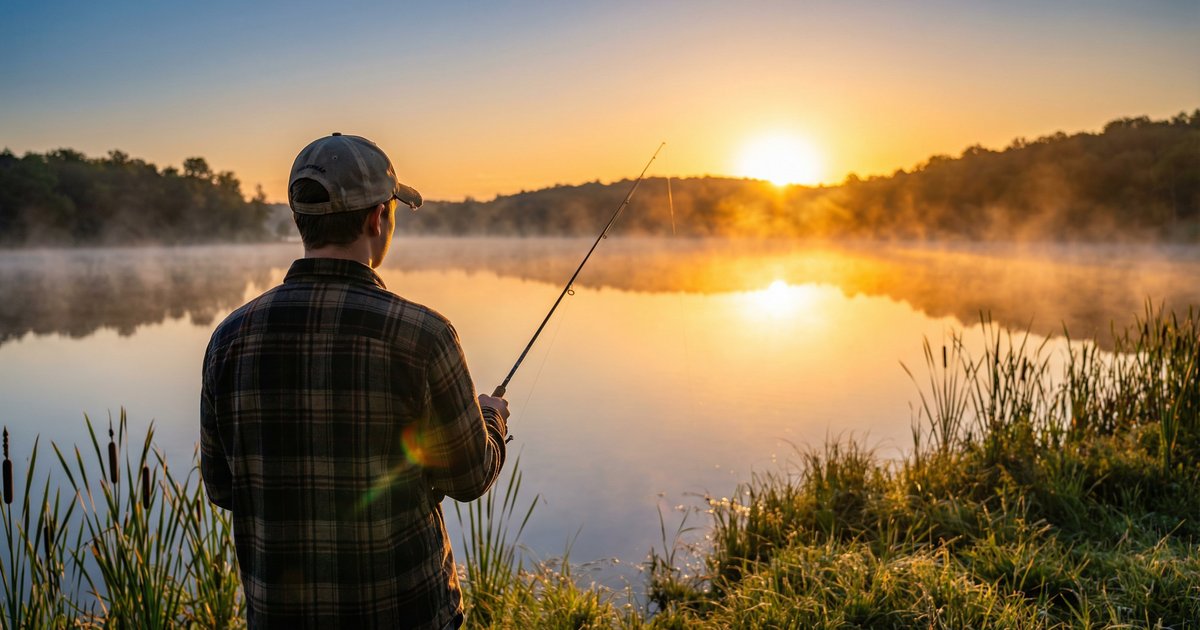
When you're new to fishing, weather seems like just a comfort factor — you want a nice day, not a rainy one. But experienced anglers know the truth: specific weather and atmospheric conditions directly determine whether fish are feeding or not. Understanding fishing forecasts transforms you from someone who hopes for luck into someone who plans for success.
This guide covers every major factor in a fishing forecast and explains, in plain English, what each means for your fishing trip.
Why Weather Matters More Than Location
Here's a truth that surprises most beginners: you can be fishing in an absolutely perfect spot — prime structure, correct depth, right time of year — and catch almost nothing, simply because conditions aren't right. Meanwhile, an experienced angler fishing a mediocre spot under ideal conditions consistently out-fishes you.
The reason: fish are cold-blooded animals whose metabolism, feeding drives, and activity levels are all controlled by external conditions — temperature, pressure, and light. Understanding these is the most important skill you can develop as an angler.
Barometric Pressure: The Most Important Number
The single most predictive number in any fishing forecast is barometric pressure — the weight of the atmosphere pressing down on the earth and water.
What it is: Pressure is measured in inches of mercury (inHg) or millibars (mb). Standard sea-level pressure is 29.92 inHg. Weather systems cause it to rise and fall.
Why fish care: Fish have swim bladders filled with gas that help them control their depth. When pressure drops, that gas expands slightly, causing discomfort. Fish respond by diving deeper and stopping feeding. When pressure is stable or rising, they're comfortable and active.
What you should watch:
- Stable or slowly rising pressure (29.80–30.20 inHg): Great fishing conditions
- Rapidly dropping pressure: Fish briefly before conditions deteriorate — often excellent fishing in the hours before a storm
- Post-front rising pressure: Typically poor fishing for 1–3 days; avoid if possible
Beginner tip: You don't need to memorize numbers. HookCast's fishing score already accounts for pressure trends and reflects them in the score you see. A score of 70+ suggests good conditions; below 50 suggests challenging conditions.
Temperature: Species-Specific Comfort Zones
Every fish species has a preferred temperature range. Outside that range, they feed less, move slower, and become harder to catch.
Common beginner mistake: Going fishing on a beautiful 70°F spring day — but the water is still 48°F from winter. The air is comfortable; the water is not. Fish are still sluggish and not actively feeding.
General guidelines:
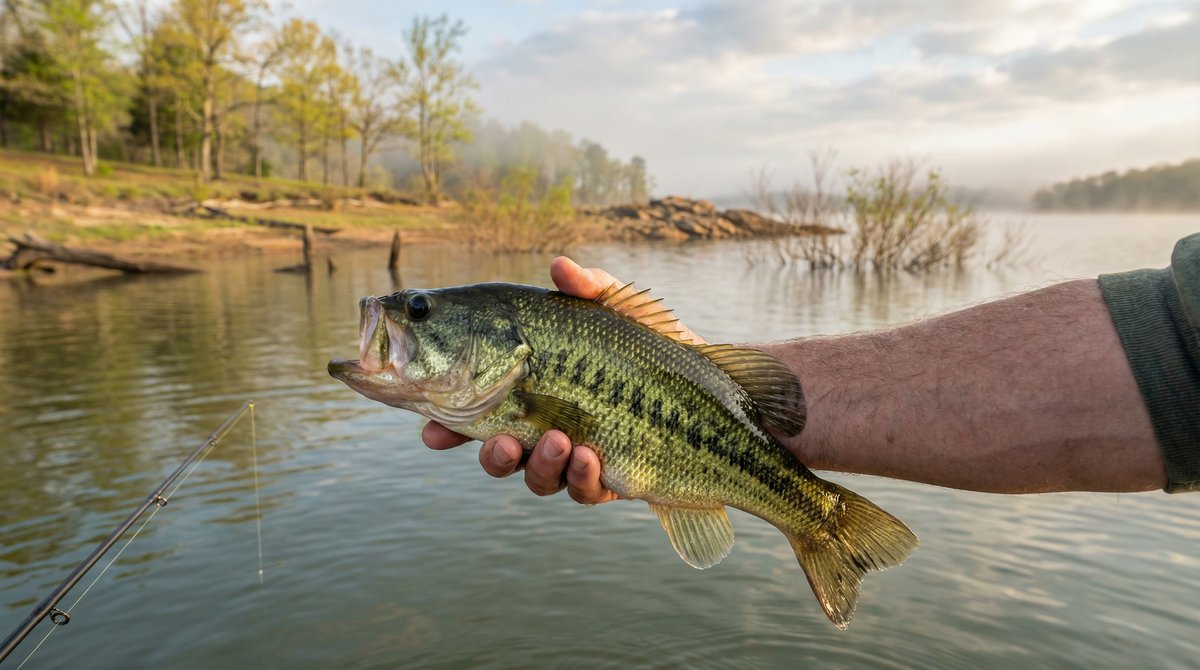
- Largemouth bass: Best at 65–75°F water
- Trout: Best at 50–65°F water
- Catfish: Active from 70–85°F
- Saltwater species: Highly variable by species (see our saltwater guide)
What you should do: Check water temperature, not just air temperature. Most fishing apps and local marinas post water temperatures. Plan trips when water temperature is in the optimal range for your target species.
Wind: Friend and Enemy
Wind is nuanced. Here's how to think about it:
Light wind (under 10 mph): Generally good. Ripples on the surface make fish less aware of you (anglers above the water). Casts are accurate and presentations look natural.
Moderate wind (10–20 mph): Creates choppy water that can concentrate baitfish against shorelines and structure. The windward bank (where wind is blowing toward) often holds feeding fish in freshwater lakes. In saltwater, this starts to limit sight-fishing.
Strong wind (20+ mph): Makes fishing difficult and potentially dangerous in open water. In a boat on a reservoir, waves push you around and accurate casting is nearly impossible. In saltwater, even inshore flats become unfishable due to choppy conditions and stirred-up sediment.
The exception: A steady gentle breeze from a specific direction (particularly a warm south or southwest wind in spring and fall) can trigger feeding activity by pushing warmer surface water against shorelines.
Cloud Cover: Low Light Equals Feeding Time
Fish are almost universally more active under low-light conditions. Overcast days are often the best days to fish because:
- Reduced light penetration allows fish to hunt in shallower water without exposure
- Predators can approach prey more closely without being seen from above
- Fish are less aware of anglers on the bank or in the boat
The golden hours: Dawn and dusk — when light is transitioning — are almost always the most productive fishing periods of the day regardless of cloud cover. Build your schedule around these transitions when possible.
Overcast vs. sunny: On a sunny, high-pressure bluebird day, many species retreat to deep water or heavy shade. On a cloudy day, those same fish spread across shallower areas and feed more aggressively.
Rain: It's More Complex Than You Think
Light rain often improves fishing — it oxygenates the water, reduces light penetration, and washes insects and worms into the water. Bass, trout, and panfish frequently feed actively during light, steady rain.
Heavy rain is different: it creates runoff that muddies the water, drops temperatures rapidly, and can make rivers unfishable due to fast current and debris. In the ocean, heavy rain can change salinity near river mouths, pushing saltwater fish away.
The best rain fishing: Light overcast rain with stable pressure and a moving tide. That's a high-probability combination.
Understanding a Fishing Score
Fishing apps like HookCast calculate a fishing score that combines all relevant variables — pressure, temperature, wind, cloud cover, tidal stage, solunar periods — into a single number from 0–100.
Here's how to interpret scores:
- 80–100: Exceptional conditions. Plan a trip if possible.
- 65–79: Good conditions. Worth fishing with confidence.
- 50–64: Average conditions. You'll catch fish with skill and patience.
- 35–49: Below-average conditions. Fish cautiously; focus on prime structure.
- Below 35: Challenging conditions. Consider postponing or fishing very specific micro-habitats.
Important: No score guarantees fish. Local knowledge, skill, and the right lure or bait still matter enormously. But fishing under high-score conditions consistently outperforms fishing under low-score conditions over time.
Building Your Fishing Forecast Routine
Develop a simple pre-trip routine:
- 3–4 days before: Check the extended forecast for pressure trends and frontal activity. Identify the best windows.
- Night before: Confirm pressure stability, check wind forecast, look up solunar periods.
- Morning of: Final pressure and wind check. Note the current fishing score.
- At the water: Observe actual conditions — water clarity, wind direction, any signs of fish activity (jumping, swirls, birds diving).
Over time, connecting your observations with forecast data builds intuition. You'll start to feel when conditions are right before you even look at a number. That's the mark of an experienced angler — and it starts with understanding the basics in this guide.
FAQ
Do I need special equipment to monitor barometric pressure for fishing?
No special equipment is required. While dedicated barometers exist, most smartphones display current pressure readings through weather apps. Tools like HookCast also factor pressure trends directly into their fishing scores, so you can get actionable information without tracking the raw numbers yourself.
Why do fish stop feeding after a storm passes, even when the weather looks nice again?
After a cold front moves through, barometric pressure typically rises sharply. This sudden change causes discomfort in fish due to the effect on their swim bladders, causing them to dive deeper and become inactive. This post-front period can last anywhere from one to three days before fish return to normal feeding behavior.
If the air temperature is warm and comfortable, why might the fishing still be poor?
Air temperature and water temperature are very different things. Water heats and cools much more slowly than air, so a warm spring day doesn't necessarily mean warm water. If the water is still cold from winter, fish will be sluggish and unlikely to feed actively, regardless of how pleasant the weather feels to you on the bank.
Does the best fishing spot matter more than weather conditions?
Surprisingly, conditions often matter more than location. An experienced angler fishing a mediocre spot under ideal weather and pressure conditions will frequently out-fish someone at a prime location when conditions are unfavorable. Learning to read forecasts and time your trips accordingly can have a bigger impact than finding the perfect fishing hole.
How do I know which water temperature is best for the fish I'm targeting?
Different species have distinct preferred temperature ranges. For example, largemouth bass feed most actively in 65–75°F water, trout prefer 50–65°F, and catfish are most active between 70–85°F. Checking the water temperature before your trip and matching it to your target species is one of the most effective ways to improve your catch rate.