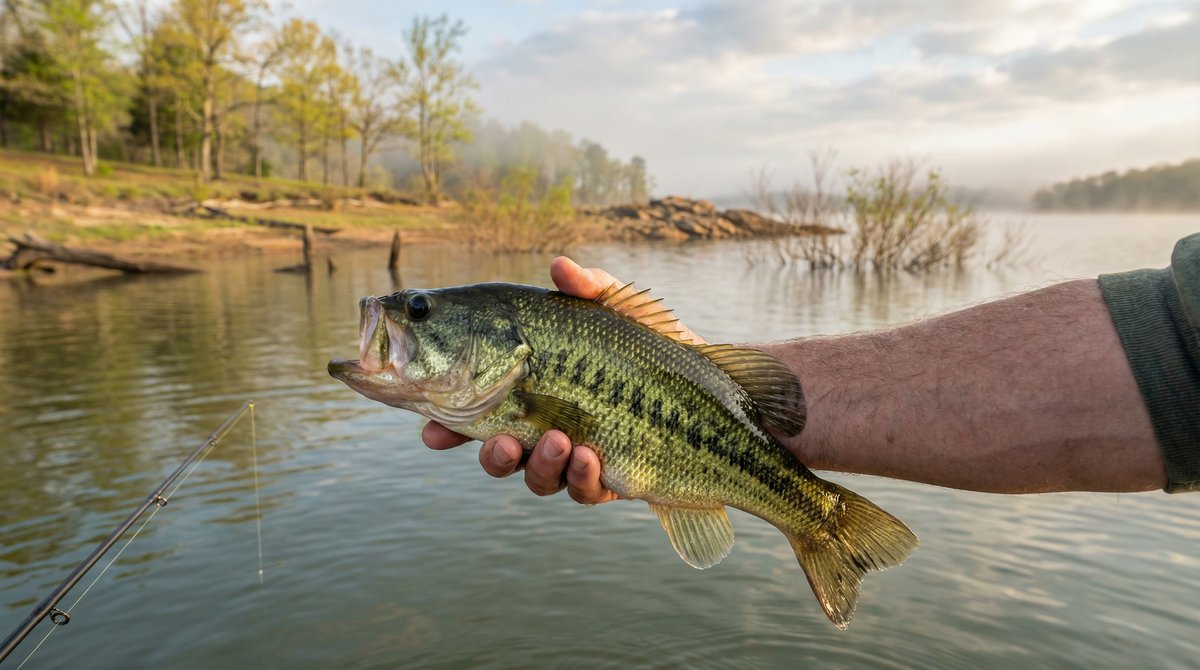
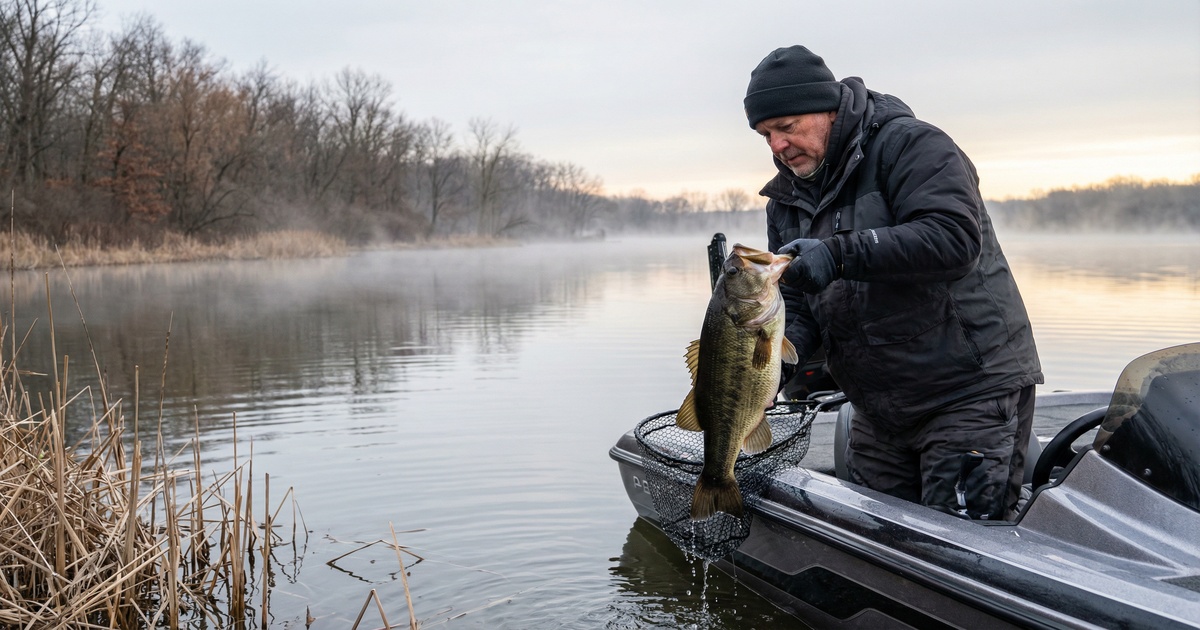
I’ll never forget a freezing mid-February morning a few years back on Lake of the Ozarks in Missouri. I had driven two hours in the dark, hauling my kayak to a remote ramp, convinced I was going to crack the winter code. The air was a crisp 28 degrees, the water wasn't much warmer, and there was actual ice freezing in my rod guides every third cast.
I threw everything I had at those fish. Spinnerbaits, crankbaits, swim jigs. I paddled for six hours, froze my toes numb, and drove home completely skunked.
I was frustrated because I didn't understand the "why." I knew bass lived in that creek arm, but I was treating cold water bass fishing like a summer derby. I was fishing too fast, in the wrong parts of the water column, completely ignoring how a bass's biology changes when water temperatures plummet.
You don't need a $50,000 bass boat with six screens to catch fish in the winter and early spring. My best day last season was out of a $600 kayak on a public reservoir in the Midwest that gets hammered by pressure. But to be consistently successful when the water is in the 30s and 40s, you have to fundamentally change your approach. You need to understand the science of cold water, master a few highly specific bass cold water tactics, and learn how to read the weather like a meteorologist.
Here is exactly how to break down winter bass fishing and the volatile early spring bass transition.
The Science of Lethargic Largemouth
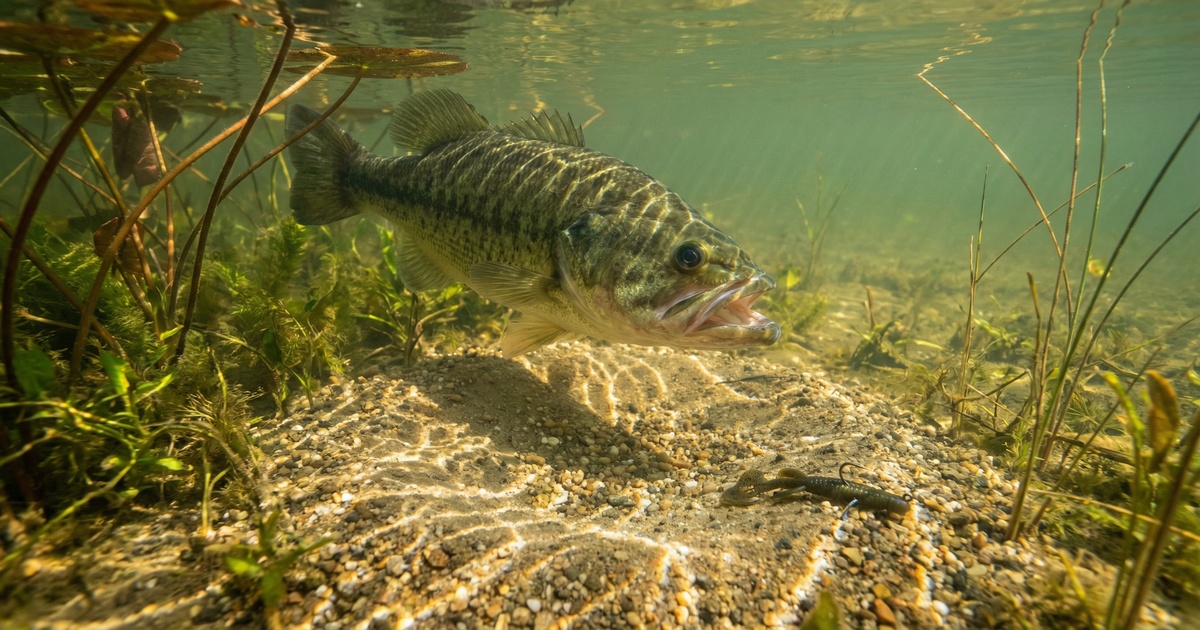
Largemouth bass are poikilothermic—their internal body temperature matches their environment. Unlike us, they can't throw on a fleece jacket or shiver to generate heat. When the water drops into the 40s or low 30s, their entire metabolic engine slows to a crawl.
In the heat of summer, a 4-pound largemouth might need to eat a bluegill every day just to maintain its body weight. In the dead of winter, that same bass might eat one small shad every ten days and be perfectly fine. Their digestion slows down, their breathing slows down, and most importantly for us anglers, their strike zone shrinks drastically.
In summer, an aggressive bass might swim twenty feet to smash a topwater frog. In the winter, you often have to put your bait within six inches of their nose to trigger a reaction.
Field Observation: Cold water fish rarely chase. If you are retrieving your bait at a speed where the fish has to actively swim to catch it, you are fishing too fast. The bite in cold water is often imperceptible—just a slight heaviness on the line.
Water Temperature and Dissolved Oxygen
It's also crucial to understand water density. Water is heaviest at 39.2 degrees Fahrenheit. In deep Midwest and Southeast reservoirs, this heavy water sinks to the bottom during the deep winter, creating a stable, slightly warmer environment in the depths compared to the freezing surface. This is why deep winter bass often congregate in 20 to 40 feet of water.
You can track seasonal water data and streamflow conditions through resources like the USGS National Water Dashboard, which is incredibly helpful if you're targeting river systems or creek arms where cold runoff can instantly kill the bite.
Locating Deep Winter and Early Spring Bass
Location is 90% of the battle. If you aren't casting where the fish are holding, no lure in the world will save you. The transition from deep winter to early spring means tracking fish as they move from their deep sanctuaries toward shallow spawning grounds.
Deep Winter Sanctuaries (Water Temps 35°F - 45°F)
When the water is at its absolute coldest, bass prioritize stability over everything else. They want areas where the water temperature doesn't fluctuate wildly when a cold front blows through.
Look for:
- Vertical Drops and Bluff Walls: In lakes like Table Rock or deep TVA reservoirs, bass will suspend right off steep rock walls. These vertical migrations allow them to move up and down in the water column to find the most comfortable temperature and pressure without expending energy swimming long horizontal distances.
- Deep Channel Swings: Where an old creek channel swings close to a prominent point.
- Deep Brush and Timber: Wood holds heat slightly better than rock and provides cover for baitfish.
The Early Spring Push (Water Temps 45°F - 55°F)
As the days get longer in late February and March, the sun angle changes. Even if the air is still freezing, solar radiation begins to warm the water. This is when early spring bass start their pre-spawn migration.
They don't just sprint to the shallow flats, though. They use "highways"—usually creek channels and ditches—to move up.
Look for:
- Secondary Points: The points just inside a major creek arm.
- Channel Ditches: A small two-foot depression running through a massive flat is an absolute goldmine. Bass will hunker down in that ditch to stay out of the current and ambush sluggish baitfish.
- Northwest Banks: This is a crucial early spring secret. The northwest corner of a lake receives the most direct afternoon sunlight. If there is dark rock or laydown timber on that bank, the water there can be 3 to 5 degrees warmer than the rest of the lake by 3:00 PM. That slight bump in temperature will trigger fish to feed.
Temperature & Tactic Matrix
| Water Temp Range | Bass Location | Activity Level | Primary Tactics |
|---|---|---|---|
| 35°F - 40°F | Deep main lake, bluff walls, deep timber (20-40ft) | Extremely Lethargic | Vertical jigging, Ned rigs, Blade baits |
| 40°F - 48°F | Suspending over deep points, creek channel mouths | Sluggish, easily spooked | Suspending jerkbaits, heavy football jigs |
| 48°F - 55°F | Secondary points, staging areas, ditches near flats | Actively feeding in short windows | Lipless crankbaits, flat-sided cranks, slow-rolled spinnerbaits |
Top 4 Lures for Cold Water Bass Tactics
I keep my kayak deck surprisingly clear in the winter. Having too many rods out leads to second-guessing. Instead, I rely on four confidence baits that cover the entire water column and account for 95% of my cold water bass.
1. The Suspending Jerkbait
If I could only take one lure out from December to March, it’s a suspending jerkbait (like a Megabass Vision 110 or a Strike King KVD Jerkbait). This lure mimics a dying shad perfectly. As water temperatures drop, threadfin shad experience cold shock and begin to die off, twitching erratically before sitting motionless.
The Tactic: Cast it out, crank it down to its maximum diving depth (usually 4 to 8 feet), and then employ a "twitch, twitch, pause" cadence.
The magic happens on the pause. In 40-degree water, I will literally count to 10 or 15 seconds before twitching the rod again. Most strikes happen while the bait is sitting dead still. You won't feel a massive thump; your line will just slowly swim to the side, or the bait will feel "mushy" on the next twitch.
Gear tip: Always throw jerkbaits on 8-to-10-pound fluorocarbon line. Fluorocarbon sinks, which helps the bait achieve maximum depth and stay perfectly horizontal on the pause.
2. The Football Jig
When the fish are glued to the bottom in deep water, dragging a heavy football jig (1/2 oz to 3/4 oz) is incredibly effective. The wide head prevents it from rolling over in the rocks.
The Tactic: Cast it to a point or a deep bluff wall and let it sink to the bottom. Do not hop this bait like you would in the summer. Drag it painfully slow across the rocks. You want to maintain bottom contact 100% of the time. Think of it like you are trying to feel every single pebble on the bottom of the lake through your rod blank. Tip the jig with a subtle trailer—avoid flapping craws that displace a lot of water. In winter, less action is more realistic.
3. Blade Baits and Jigging Spoons
When deep winter bass are stacked up vertically in 30 feet of water, casting horizontally isn't efficient. This is when heavy metal shines. A 1/2 oz blade bait (like a Silver Buddy) or a Hopkins spoon triggers pure reaction strikes.
The Tactic: Drop the bait directly beneath your kayak or boat, right into the school of fish you've marked on your sonar. Lift the rod tip sharply about two feet, then let the bait flutter back down on a semi-slack line. The erratic flash mimics a dying baitfish fluttering to the bottom. Watch your line closely—the bite almost always occurs as the bait is falling.
4. The Ned Rig (The Finesse Savior)
When a brutal cold front passes and the fish completely shut their mouths, the Ned rig is my ultimate fallback. It’s essentially a tiny, buoyant plastic worm threaded onto a light mushroom-style jig head (1/16 to 1/8 oz).
The Tactic: Because the plastic is naturally buoyant, it stands straight up off the bottom like a defensive crawfish or a bottom-feeding minnow. Cast it out, let it hit the bottom, and just let it sit there. The natural current of the water will give it all the action it needs. Slowly drag it a few inches and pause again. It catches fish when absolutely nothing else will.
Kayak-Specific Cold Water Strategies
Fishing out of a kayak in the dead of winter or early spring presents unique challenges. You are closer to the water, more susceptible to the wind, and lack the high-powered trolling motors of the big fiberglass rigs.
But a kayak can actually be a massive advantage for winter bass fishing if used correctly. We can slide into shallow staging creeks silently without spooking fish in the ultra-clear winter water.
Boat Control and Wind Management
Wind is your worst enemy in a kayak, especially when you are trying to fish slowly. If the wind is blowing your kayak at 2 mph, and you're trying to drag a jig at 0.5 mph, you are going to lose bottom contact instantly.
Invest in an anchor trolley and a lightweight anchor pole, or rely on pedal-drive systems to hold your position. Position your kayak upwind of your target, and cast with the wind. This keeps a bow out of your line, allowing you to detect those subtle cold water strikes.
Safety First
I cannot emphasize this enough: cold water kills. If you flip a kayak in 40-degree water, cold shock response causes involuntary gasping, and hypothermia sets in within minutes.
- Always wear a USCG-approved PFD (not just keep it strapped to the back of the seat).
- Dress in layers, avoiding cotton. Synthetic base layers and a dry suit or high-quality waterproof bibs are non-negotiable.
- Keep a dry bag with a spare change of clothes and fire-starting materials secured in your hull.
- Never fish cold water without telling someone exactly where you are launching and when you plan to be back.
Reading the Weather: The Cold Front Dilemma
Here is the scenario that breaks anglers' hearts every spring: It’s Thursday, it’s 65 degrees, the sun is shining, and your buddies are texting you pictures of fat prespawn bass they caught in 3 feet of water. You take Saturday off to go fish. By Friday night, a massive front blows through. The temperature drops to 40, the wind howls out of the north, and on Saturday, the lake looks like a ghost town. You get skunked.
Why? Barometric pressure.
Bass are incredibly sensitive to changes in atmospheric pressure due to their swim bladders. Standard atmospheric pressure at sea level is roughly 1013.25 hPa (or 29.92 inHg), according to NOAA weather data.
When a low-pressure system moves in (pre-front), the pressure drops. This relieves pressure on the bass's swim bladder, making them feel comfortable and aggressive. They will feed heavily.
When the cold front passes, high-pressure, dense, cold air moves in. The barometric pressure spikes rapidly. This increased pressure pushes down on the water column and directly affects the bass, causing them to retreat to deeper water, bury themselves in thick cover, and refuse to eat.
Leveraging Weather Data to Fish Smarter
You cannot rely on just looking out the window. You need to track the pressure trends. I always pull up my app to check current pressure on HookCast two days before my trip.
If I see a steep rising barometer on the morning I'm supposed to fish, I know immediately that my shallow water, fast-moving baits are staying in the truck. I will immediately transition to deep water, slow my retrieve down by 50%, and downsize my baits to Ned rigs and small jigs.
Conversely, if I know a front is arriving at 2:00 PM, I will fish aggressively with lipless crankbaits and spinnerbaits right up until 1:30 PM to capitalize on the pre-frontal feeding frenzy. For more localized planning, you can look at the fishing forecast for your area to pinpoint exactly when that pressure shift will hit your specific lake.
The Impact of Cold, Muddy Runoff
One final weather factor to watch in early spring is rain. A warm spring rain can trigger the best fishing of the year by warming up the back of creek arms. However, cold winter rain or snowmelt is the kiss of death.
Cold, muddy water is the toughest condition in all of bass fishing. Bass are sight feeders to a large degree. When the water gets cold, their metabolism drops; when it gets muddy, their visibility drops to zero. They simply hunker down and wait it out. If you encounter cold, muddy water in a creek arm, don't waste your time—paddle back out to the main lake where the water is clearer.
Key Takeaways: Your Cold Water Checklist
To wrap this up, before you back down the ramp this winter or early spring, run through this quick checklist:
- Slow down: Whatever speed you think is slow enough, cut it in half. Pause your jerkbaits longer. Drag your jigs slower.
- Target vertical structure: In deep winter, look for bluffs, channel swings, and steep drops where fish can change depth without swimming far.
- Follow the sun: In early spring, prioritize the northwest banks that get the most afternoon sun. Even a 2-degree water temperature increase can ignite a feeding window.
- Watch the barometer: Understand if you are fishing pre-front (low/falling pressure) or post-front (high/rising pressure) and adjust your aggression accordingly.
- Downsize your line: Cold water is often crystal clear water. Drop down to 8-lb or 10-lb fluorocarbon to increase your bites and give your lures a more natural, fluid action.
Cold water bass fishing requires patience, mental toughness, and a willingness to freeze your fingers a bit. But when you finally figure out the puzzle, stringing together a pattern while everyone else is sitting at home by the fireplace is one of the most rewarding feelings in angling.
*
FAQ
What is the best lure for winter bass fishing?
The suspending jerkbait is widely considered the best lure for winter bass fishing in clear to lightly stained water. Because it pauses and hovers perfectly still in the water column, it effectively mimics the dying shad that lethargic bass feed on without requiring them to expend energy chasing down a fast-moving meal.
Where do largemouth bass go in cold water?
In water temperatures between 35°F and 45°F, largemouth bass retreat to deep, stable environments where the temperature fluctuates less. They commonly stack up on vertical structure like bluff walls, deep channel swings, and deep submerged timber in 20 to 40 feet of water, which allows them to easily move up and down the water column as needed.
How does a cold front affect early spring bass?
A cold front brings rapidly rising barometric pressure and dropping air temperatures, which dramatically slows a bass's metabolism and compresses their swim bladder. This forces early spring bass to abandon shallow staging areas, retreat to deeper water or bury into heavy cover, and develop a much smaller strike zone, requiring anglers to slow down and use finesse presentations.
What water temperature is too cold for bass fishing?
While bass can survive beneath frozen surfaces, water temperatures below 39°F make them extremely lethargic and difficult to catch with artificial lures. However, there is no temperature strictly "too cold" to fish, provided you locate their deep winter sanctuaries and slow your presentation down to a near standstill using techniques like vertical jigging or Ned rigs.