Chesapeake Bay Fishing Year-Round: Rockfish, Bluefish, Flounder & Crabs by Season
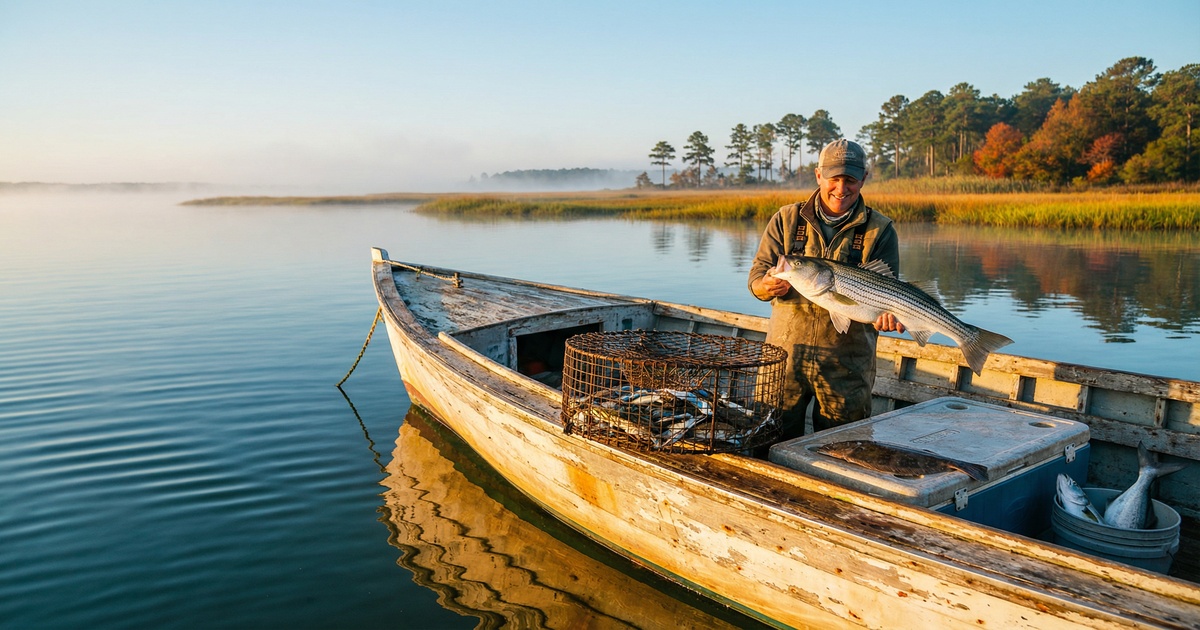
It's a Tuesday morning in late April, and I'm watching a waterman haul his crab pots about 400 yards off the Eastern Shore. Osprey are working the surface near a channel edge, diving every few minutes. Three pelicans follow them like freeloaders at a buffet. Below all that, I know there are rockfish pushing up from the lower bay, chasing bunker that have stacked against a tidal current break.
That scene — layered, interconnected, constantly shifting — is the Chesapeake Bay in a nutshell. It's not a lake you can figure out once and repeat forever. It's an estuary. A 200-mile stretch of tidal mixing, seasonal migrations, shifting salinity, and species that come and go like guests at a revolving door. Learn the rhythm, and you'll catch fish on virtually every trip. Miss it, and you'll be the guy on the ramp asking why nobody's biting.
This guide breaks down the bay's major gamefish and how to find them through every season — because understanding when to target which species is half the battle.
Why the Chesapeake Bay Fishes Differently Than Anywhere Else
The Chesapeake isn't just big water — it's complex water. As the largest estuary in the United States, it drains over 64,000 square miles of watershed from New York to Virginia. That means variable salinity from north to south, tidal swings that move bait and predators with clockwork precision, and water temperatures that can swing 30°F between seasons.
The lower bay, everything below the Bay Bridge, runs saltier and warmer. That's why species like flounder and bluefish concentrate there first each spring. The upper bay — above Annapolis and into the Susquehanna Flats — behaves more like a river system, with fresh water inputs that draw striped bass throughout their spring spawn.
Salinity and temperature are your starting points. When water hits around 55°F in spring, rockfish start moving. When it drops back below 50°F in fall, they school up and gorge before heading offshore. NOAA Fisheries tracks these thermal migration patterns, and understanding the science behind why fish move when they do will make you a sharper angler.
Tides matter enormously in the bay. The average tidal range is only about 1–2 feet — far less dramatic than an ocean inlet — but that subtle push and pull still funnels bait along channel edges, over grass flats, and into the mouths of creeks. I always check tide charts on HookCast before picking my launch point, because moving water on the Chesapeake almost always beats slack.
Rockfish (Striped Bass): The Bay's Marquee Species
Chesapeake rockfish aren't a seasonal fish — they're a year-round fish, if you know where to look. But there are two windows where the fishing turns electric, and missing them feels like skipping the Super Bowl.
Spring Run: March Through May
This is the main event. Striped bass spawn in the Chesapeake's freshwater tributaries, and the Susquehanna River and its flats near Havre de Grace are ground zero. Fish begin staging in the lower bay in late February and push north as water temperatures climb toward 60°F through March and April.
The Susquehanna Flats, where the river meets the bay near the Maryland-Pennsylvania line, produce some of the best light-tackle striper fishing on the East Coast during this window. Fish stack in 6–12 feet of water, chasing white perch and herring pushed along by the current.
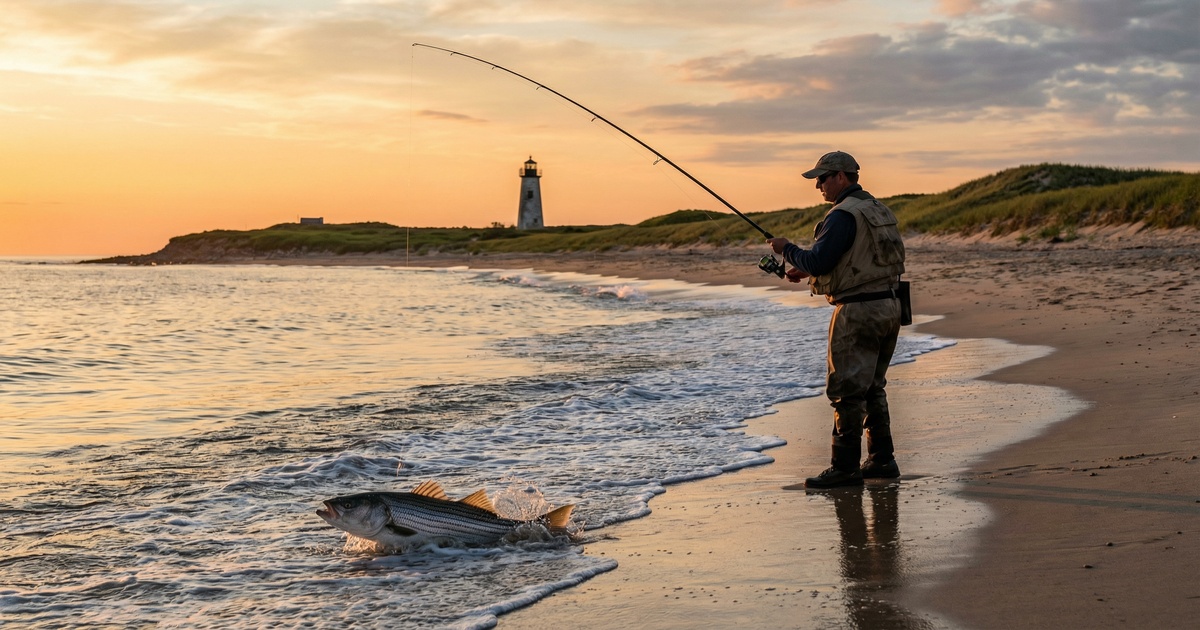
Field note: During the spawn, I fish the first two hours of an incoming tide on the Flats. The current pushes baitfish off the grass edges, and stripers set up just downstream of the seams. A white bucktail or chartreuse paddle tail on a jig head will outfish live bait on some mornings.
After the spawn — typically late April into May — post-spawn females drop back toward the main channel. These fish are big, hungry, and catchable on topwaters at dawn. The window is short, maybe three weeks, but it's some of the most fun fishing I've had on the bay.
Regulations note: Maryland and Virginia both carry specific size and slot limits for rockfish that change annually. Always check the current Maryland DNR regulations before keeping anything.
Fall Run: October Through December
The fall rockfish season is less about spawning and more about feeding. As water temperatures drop below 60°F, stripers that have been scattered across the bay all summer begin schooling up and pushing bait against the surface. Bluefish and stripers often mix in the same breaking schools during this period, creating chaotic, rod-bending action.
Watch the birds. Working gulls and gannets over open water almost always mark feeding fish below. When you find them, topwaters, poppers, and metal spoons work fast. The fish are aggressive and they move quickly — a school might be visible for ten minutes and gone the next.
By November, the bigger fish push toward the mouth of the bay and out into the coastal Atlantic. But the middle bay stays productive through Thanksgiving in most years.
Summer Rockfish: Deeper, Slower, Still Findable
Don't write off summer rockfish. They don't disappear — they go deep. Work the main channel edges in 30–50 feet of water with live spot or cut bunker on bottom rigs. Early morning topwater action near bridge pilings and channel markers can produce before the heat sets in. It's slower fishing, but it's there.
Bluefish: The Bay's Most Aggressive Visitor
Bluefish push into the lower Chesapeake by early May, arriving from their winter grounds off the Carolina coast. Pound for pound, they're one of the hardest-fighting fish in the bay — and they will absolutely destroy a poorly managed landing net.
Finding Blues in Spring and Early Summer
The lower bay and its tributary mouths — the James, York, and Potomac rivers — see the first bluefish action each spring. Early fish typically run in the 2–5 pound range, commonly called "cocktail blues," and they're ideal for light spinning gear with 1–2 oz metal spoons or small poppers.
Look for bluefish under breaking water near channel edges, especially on outgoing tides when bait gets pushed off the shallows. The bite is often visual — a blitzing school of blues churning the surface is unmistakable.
The Mid-Bay Blitz: July Through September
By July, larger bluefish in the 5–12 pound range push up into the middle bay. Points, shoals, and the downwind end of islands all concentrate bait, and blues follow. Structure is your friend. Sandy Point shoal off Annapolis, the Poplar Island complex, and the mouth of the Choptank River are all reliable mid-summer locations.
Pro tip: When targeting bluefish, rig a short wire leader or a heavy fluorocarbon section of 40–50 lb test. Blues will bite through mono in a single run, and I've lost more good fish to cut-offs than I care to admit. A 12–18 inch wire leader won't kill your presentation on poppers or spoons.
Fall Departure: October and Beyond
Bluefish begin moving back out of the bay by mid-October, often mixing with the fall rockfish schools. This creates some of the fastest mixed-bag fishing of the year, though you'll need to adjust your approach — rockfish are more selective than blues, and a topwater that fires up a bluefish school can sometimes scatter feeding stripers.
Flounder: The Flat Fish That Rewards Patience and Positioning
Flounder are the bay's ambush predators, and they play by different rules than rockfish or blues. They don't chase bait across open water. They hold on structure, face into the current, and wait for bait to come to them. Understanding that single behavior will improve your flounder catch rate more than any tackle change you'll ever make.
Spring Arrival: May Through June
Flounder push into the bay from offshore as water temperatures reach the mid-60s. The lower bay — particularly near the mouth of the Chesapeake off Virginia Beach and along the Eastern Shore barrier islands — sees the earliest action.
Target channel edges, bridge pilings, oyster reefs, and sand transitions. Flounder hold where sand meets structure. A bucktail jig tipped with a Gulp! shrimp or a strip of squid, worked slowly along the bottom on a controlled drift, is the most consistently effective presentation I know.
The Chesapeake Bay Bridge-Tunnel is a flounder destination unto itself, with structure running for miles and bait concentrating around every piling. The toll is worth paying.
Peak Season: July and August
Mid-summer is prime flounder time in the mid-bay. Fish have pushed north and you'll find them from the mouth of the Potomac south to the lower bay, holding in channels and at tributary mouths. Current speed matters — flounder tend to slide slightly off their ambush spots during strong current and tuck behind structure. A drift speed of around 0.5–1 knot is ideal. Too fast and your bait lifts off the bottom; too slow and you're not covering water efficiently.
Use HookCast's fishing forecast for Annapolis to time your drifts around tidal windows — the hour before and after a tide change tends to produce the most active flounder in my experience.
Fall Departure: September and October
As water cools into the mid-50s, flounder stage near bay inlets and channel openings before migrating offshore to their winter grounds. This pre-migration concentration puts numbers of fish in predictable spots near the mouth of the bay, and keeper-sized fish are common. Time it right, and it can be the best flounder fishing of the entire year.
Blue Crabs: The Bay's Beloved Bottom Dwellers
No Chesapeake Bay fishing guide is complete without talking crabs. The blue crab is central to the bay's ecology and its culture. According to NOAA Fisheries, the Chesapeake Bay supports the largest blue crab fishery in the United States.
Crabbing Seasons at a Glance
| Season | Crab Behavior | Best Method |
|---|---|---|
| Early Spring (March–April) | Crabs emerging from winter dormancy in lower bay | Trot lines, pots near lower bay channels |
| Late Spring–Summer (May–September) | Peak activity across entire bay | Pots, hand lines, chicken necks |
| Early Fall (October) | Females moving toward saltier lower bay to overwinter | Pots near bay mouth and channel edges |
| Winter (November–February) | Crabs buried in bay bottom sediment | Season effectively closed |
Crab pots are the most efficient method, but hand-lining from docks and bridges with a chicken neck or fish head on a string is how most people first fall in love with crabbing. It requires no special gear, produces immediate feedback, and is one of the better ways to spend a slow afternoon on a dock. Licensing requirements vary between Maryland and Virginia, and size limits for male crabs (jimmies) are typically 5 inches point-to-point. Check your state's current rules each season, as they update annually based on population surveys.
How Crabs Affect Fishing
This is something anglers frequently overlook: crab molting events in early summer can dramatically shift bottom fishing patterns. When crabs shed their shells, soft-shells become available prey. Drum, stripers, and flounder all key on soft crabs during molt periods. Matching that bait source — putting a soft or peeler crab on the hook — can be the difference between a slow day and your best day on the water.
Seasonal Quick Reference: What to Target and When
| Month | Best Target | Zone | Key Bait/Lure |
|---|---|---|---|
| March | Rockfish (early run) | Upper bay, tributaries | Bucktails, live herring |
| April | Rockfish (spawn) | Susquehanna Flats | Jigs, topwaters |
| May | Rockfish, bluefish, flounder (early) | Mid-bay, lower bay | Metal spoons, bucktail |
| June | Flounder, bluefish, stripers | Mid-bay, channels | Gulp!, chicken rigs |
| July | Flounder, bluefish, crabs | Bay-wide | Bucktail, pots |
| August | Flounder, bluefish, crabs | Bay-wide | Drift rigs, peeler |
| September | Bluefish, flounder staging | Mid to lower bay | Poppers, spoons |
| October | Rockfish (fall run), bluefish | Mid-bay, breaking water | Topwater, bunker chunks |
| November | Rockfish | Lower bay, channel edges | Live spot, cut bunker |
| December | Rockfish (final push) | Lower bay | Heavy jigs |
Key Takeaways for Fishing the Chesapeake Smarter
- Match your target to the season. Chasing flounder in March or hunting surface rockfish in August will frustrate you. Fish what the bay is offering.
- Tides drive everything. Even the bay's modest 1–2 foot tidal swing concentrates bait and positions predators. Moving water almost always beats slack. Check tide charts for your area before heading out.
- Temperature is your migration trigger. Water temps in the 55–65°F range signal the bay's major species movements. NOAA tidal predictions and temperature data can help you track these changes across bay zones.
- Birds tell the truth. Working gulls and gannets over open water nearly always mean feeding fish below. Don't ignore them.
- Lower bay first, upper bay later. Saltier and warmer water in the lower bay means fish arrive there first each spring. Watch that zone as your leading indicator.
- Blue crabs aren't just for eating. Peeler and soft crab in season will outperform most artificials for drum and flounder. Pay attention to the molt cycle.
- Cold fronts reset the board. A sharp barometric pressure drop will turn fish off fast — typically 24–48 hours after the front passes. Plan around weather windows, not just your schedule.
FAQ
What is the best month to fish the Chesapeake Bay?
April and October are widely considered the top two months on the bay. April brings the spring striper migration and spawning activity on the Susquehanna Flats, while October delivers fall blitz fishing with schooled-up rockfish and bluefish driving bait to the surface. Both windows offer high fish activity, visual opportunities, and diverse species action.
When is rockfish season in the Chesapeake Bay?
Rockfish are present in the Chesapeake Bay year-round, but the two peak windows are the spring run from March through May and the fall run from October through December. Spring fish push north toward the Susquehanna Flats to spawn, while fall fish school up in the mid-bay and feed aggressively before moving offshore. Size and bag limits change annually and differ between Maryland and Virginia — always check Maryland DNR or Virginia DWR before keeping fish.
Is flounder fishing good in the Chesapeake Bay?
Yes — the Chesapeake supports a solid summer flounder population from May through October. The best fishing typically runs from late June through August, with fish concentrated on channel edges, oyster reefs, and structure near tributary mouths. The Bay Bridge-Tunnel area and the lower bay near Virginia are particularly productive. Slow drifts with bucktail jigs tipped with Gulp! or squid strips are the most reliable approach.
How do tides affect fishing in the Chesapeake Bay?
Even with only a 1–2 foot tidal range, moving water in the Chesapeake still concentrates baitfish along channel edges, grass flats, and current seams — and predators follow. The hour before and after a tide change is often the most productive window. Slack tide can slow the bite significantly, especially for flounder and stripers that rely on current to position themselves for ambush feeding.
Can you fish the Chesapeake Bay in winter?
Winter fishing is slow but not impossible. Striped bass linger in the lower bay through December and into January in warmer years, concentrated in deep channel water. Blue crabs are dormant in bottom sediment and flounder have moved offshore. For most anglers, January and February are better spent planning spring trips — though the dedicated few will always find a way to put a fish in the boat.