If you fish saltwater, tides don't just influence your chances — they are your chances. Understanding tide conditions is the difference between a productive session and hours of frustration. This guide breaks down everything you need to know to read tides and find fish.
Why Tides Matter So Much
Tides create current, and current is everything in saltwater fishing. Moving water does two critical things:
- Concentrates baitfish — Current funnels small baitfish and crustaceans through specific channels, points, and structures. Predators position themselves to ambush this easy meal.
- Activates prey — Crabs, shrimp, and worms emerge from the bottom and grass during moving water. This triggers feeding behavior in predator species.
Slack tide — the brief period when water stops moving between tidal stages — is typically the worst time to fish. Everything that was concentrated during the tide disperses, baitfish spread out, and predators temporarily stop feeding.
The Four Tide Stages
Low Tide
At low tide, water depth is minimal and fish are often concentrated in channels, holes, and deeper pockets. While this can be productive — predators stack up in remaining deep water — it can also be slow if the area you're fishing becomes too shallow.
Best approach: Target deeper channels adjacent to shallow flats. Redfish and snook push against deep banks waiting for the water to rise again.
Incoming (Flood) Tide
As the tide comes in, water floods back over shallow flats, grass beds, and mangrove edges. Baitfish move onto the flats to feed, and predators follow. Many saltwater anglers consider the first two hours of an incoming tide to be the single best fishing window of the tidal cycle.
Best approach: Position yourself at the edge of a flat as water first begins to flood. Cast toward the advancing waterline. Snook, redfish, and flounder cruise the edges aggressively during early flood tide.
High Tide
At high tide, fish have spread across vast expanses of shallow water. Redfish especially will push into flooded grass that was dry an hour ago. This can be excellent but requires mobility — covering water to find pods of active fish.
Best approach: Look for movement — nervous water, wakes, tailing redfish. Cast ahead of moving fish rather than on top of them. Use weedless presentations in grass.
Outgoing (Ebb) Tide
As water drains back off flats and marshes, it funnels through specific exits: cuts, points, creek mouths, and bridge pilings. Baitfish and crustaceans are swept along with the current, and predators stack up at these pinch points to intercept easy meals.
Best approach: Find where multiple draining channels converge. Bridge pilings, oyster bars at creek mouths, and grass points are prime locations. Let your lure drift naturally with the current — it looks exactly like fleeing prey.
Best Tide for Different Species
| Species | Best Stage | Notes |
|---|---|---|
| Redfish | Flood tide on flats | Tailing fish in shallow grass |
| Snook | Outgoing tide at structure | Stack in ambush positions |
| Flounder | Outgoing tide at channel edges | Lie in wait at current breaks |
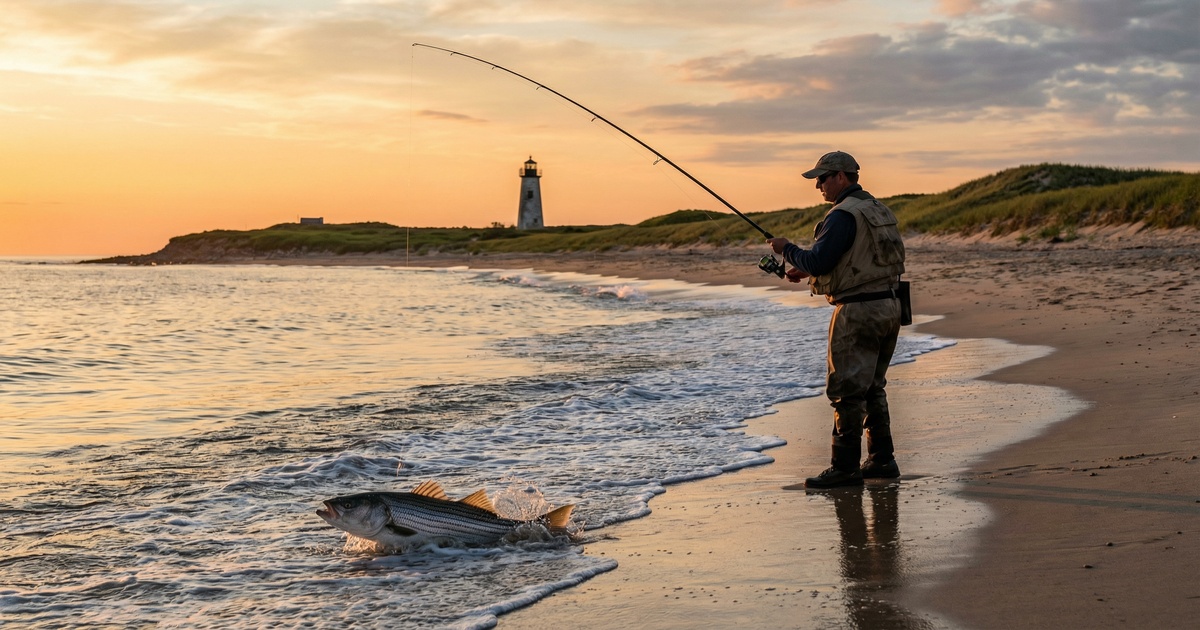
| Striped Bass | Strong outgoing or flood near structure | Current is key |
| Tarpon | Outgoing tide at passes and inlets | Daisy-chaining behavior |
| Speckled Trout | Mid-tide, grass flats | Active throughout moving tide |
Reading a Tide Chart
A tide chart shows predicted high and low tide heights (in feet) and times for each day. Here's how to interpret it:
Tide range — The difference between high and low tide at a given location. A 4-foot range creates significantly more current than a 1-foot range. Bigger ranges generally mean more productive fishing on both flood and ebb stages.
Timing — Tides don't hit all locations simultaneously. A tide chart for Miami doesn't apply to a spot 30 miles north. Always use site-specific tide data. HookCast provides tide predictions for thousands of NOAA stations nationwide.
Spring vs. Neap tides — Near full and new moons, tidal range is greatest (spring tides). During quarter moons, range is minimal (neap tides). Spring tides create stronger currents and often the most productive fishing.
The Two-Hour Rule
Most experienced saltwater anglers follow a simple guideline: fish the two hours before and two hours after a tide change. This captures:
- The strongest current of the cycle (typically just before peak flow)
- The transition moment when fish reposition
- The early recovery phase when fish begin feeding aggressively again
Avoid the slack period at the actual high or low. The 30–45 minutes when water barely moves is usually the slowest fishing of the day.
Tides + Barometric Pressure: The Power Combination
Tides don't work in isolation. Layer in barometric pressure data for a dramatically more complete picture:
- Incoming tide + stable/rising pressure = excellent conditions
- Outgoing tide + dropping pressure = exceptional, particularly before a frontal system
- Any tide + post-cold-front rising pressure = expect tough fishing regardless of tide stage
HookCast's fishing score combines real-time tide stage, tidal flow rate, barometric pressure trends, and solunar data into a single score — so you always know when conditions align for peak fishing.
FAQ
What is the best tide stage for fishing overall?
Most saltwater anglers agree that the first two hours of an incoming (flood) tide offer the single best fishing window of the tidal cycle. As water floods back over shallow flats and grass beds, baitfish move in to feed and predators follow aggressively. That said, the outgoing tide can be equally productive at the right locations, such as creek mouths, bridge pilings, and grass points where current concentrates baitfish.
Is fishing during slack tide ever worth it?
Slack tide — the brief window when water stops moving between tidal stages — is generally considered the worst time to fish in saltwater. Baitfish disperse, predators temporarily stop feeding, and the current-driven activity that concentrates fish disappears. However, if slack tide coincides with dawn or dusk, low light conditions can still trigger some feeding activity, making it worth trying rather than packing up entirely.
How long does each tide stage last?
In most locations, a complete tidal cycle runs approximately 12.5 hours, meaning you experience two high tides and two low tides every 24 hours. Each stage — low, incoming, high, and outgoing — lasts roughly 3 hours, though the transition periods between stages (including slack tide) are relatively brief. Tidal timing and duration vary by location, so always check a local tide chart for accurate predictions.
Do tides affect freshwater fishing?
Tides have little to no direct effect on inland freshwater lakes and rivers. However, freshwater systems near coastal areas — such as tidal rivers, estuaries, and brackish marshes — are significantly influenced by tidal movement and the same principles in this guide apply. If you fish a river that connects to a bay or estuary, paying attention to tides can make a meaningful difference in your results.
Where can I find accurate tide charts for my fishing location?
Several reliable resources provide free, location-specific tide predictions. NOAA's Tides and Currents website (tidesandcurrents.noaa.gov) is one of the most accurate sources for U.S. coastal locations. Fishing apps such as Fishbrain, Tide Graph Pro, and Navionics also include integrated tide charts. For the most useful planning, look for charts that show both tide height and current speed, as strong current movement — not just water level — is what most directly triggers fish activity.